
Due to the nature of heavyweight boxing, with its many official sanctioning bodies, it’s often difficult to trace the exact champions at any one time. For the purposes of this piece, our timeline begins in 1885. John L. Sullivan was the first globally recognised heavyweight champion of the world, and due to the lack of separate sanctioning bodies at the time, he is now known historically as the first lineal heavyweight champion. The first sanctioning bodies did not come into play until the 1920’s, so up until that point, every world champion is also the lineal heavyweight champion. Sullivan made his first title defence on the 29th of August 1885, against Dominick McCaffrey, where he won a six round points decision. Sullivan would go on to defend his title six times, including two draws against Patsy Cardiff and Charlie Mitchell, before he lost to James J. Corbett on the 7th of September 1892 in a 21st round knockout in New Orleans.
Corbett made two successful defences against Charley Mitchell and Tom Sharkey before losing to British boxer Bob Fitzsimmons on the 17th of March 1897. Fitzsimmons defended his title just once before losing to James J. Jeffries on the 9th of June 1899. This would be the last time that the title would change hands before the beginning of the 20th century. Jeffries made 9 defences of his titles before his final fight on the 26th August 1904. Jeffries retired 9 months later, meaning that the lineage of the heavyweight division was broken for the first time.
On the 3rd of July 1905, Marvin Hart faced off against Jack Root for the vacant title, a fight which Hart won in the 12th round as he knocked Root out. Hart never successfully defended his title, and on the 23rd of February 1906, he lost to Canadian Tommy Burns on a points decision. Burns remained unbeaten then for two years and 13 fights, before Jack Johnson beat him on boxing day in 1908 in Sydney. Jack Johnson was the first black boxer to ever be allowed to fight for the heavyweight title, having previously tried and failed to secure a title fight against James J. Jeffries.
Johnson remained as the heavyweight champion of the world for 7 years, making 9 successful defences between 1908 and 1915, before losing to Jess Willard in a 26th round KO. Willard won just once as heavyweight champion in 1916, but would not fight then for three years, before losing his title to Jack Dempsey on the 4th of July 1919. Under Dempsey’s reign, the first major sanctioning bodies emerged, and on the 2nd of July 1921, Dempsey won the National Boxing Association’s (NBA) heavyweight title, and before his next fight against Tommy Gibbons he was awarded the Ring Magazine heavyweight title. Then before his subsequent fight against Luis Angel Firpo he was awarded the New York State Athletic Commission’s (NYSAC) heavyweight title. Dempsey was still regarded as the lineal heavyweight champion, but he had now become the undisputed heavyweight champion of the world.
Unfortunately for Dempsey however, he did not keep this title for long, as he lost his next fight to Gene Tunney in 1926, to a unanimous decision. Dempsey attempted to win back his titles a year later but the same thing happened again as Tunney was awarded a unanimous decision. Tunney would only defend his titles once more against Tom Heeney, before he retired 5 days later on the 31st of July 1928.
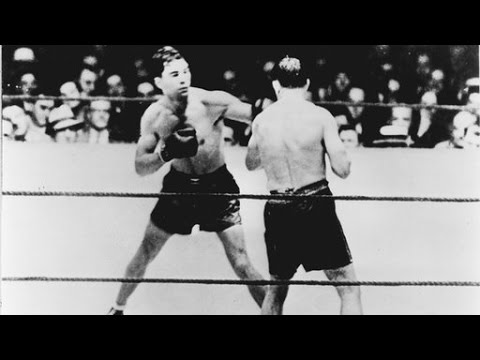
The titles were then left vacant for two years, before a title fight took place between Max Schmeling and Jack Sharkey in 1930 in New York. Sharkey was disqualified in the 4th round for a low blow, and Max Scheming became, to this day, the only ever German heavyweight champion of a major sanctioning body. Following the fight however, the NYSAC withdrew its recognition of Schmeling as their heavyweight champion as he refused to Grant Sharkey an immediate rematch. Schmeling was named the International Boxing Union’s (IBU) heavyweight champion on the 7th of January 1931 though. The two of them would face off again in 1932, as Sharkey won a controversial split decision. The victory gained Sharkey the recognition as the NYSAC champion as well.
Sharkey’s reign lasted 1 year and eight days before he lost to Italian Primo Carnera, who made three successful defences before losing to Max Baer on the 14th of June 1934. The titles would then be passed to James J. Braddock just under a year later as Braddock won a unanimous decision victory over Baer. Braddock would not fight for two years after his victory, before attempting to defend his title against the ‘Brown Bomber’, Joe Louis in 1937. Louis knocked Braddock out in the 8th round, and so began the longest reign of any heavyweight champion.
Louis would remain unbeaten for the next 12 years and 26 fights, including beating notable fighters such as Max Schmeling and Jersey Joe Walcott. Louis retired for the first time on the 1st of March 1949, but due to his later return to the ring, he was still regarded as the lineal heavyweight champion. On the 22nd of June 1949, Ezzard Charles and Jersey Joe Walcott fought for the vacant NBA title, a fight which Charles won by a unanimous decision. Just under a year later, a fight took place for the vacant IBU title between Lee Savold and Bruce Woodcock, which Savold won by a 4th round knockout. On the 27th of September 1950, Joe Louis made his return as he fought NBA world champion Ezzard Charles in New York. Louis lost his second fight as a professional as Charles won a unanimous decision, winning the Ring, NYSAC and lineal heavyweight titles in the process. On the 15th June 1951, Joe Louis fought IBU heavyweight champion Lee Savold, and, despite winning the fight by a 6th round knockout, the IBU declared their newest heavyweight champion to be Ezzard Charles, meaning that Charles became the unified, undisputed heavyweight champion of the world. One month later, Charles put all of his titles on the line against Jersey Joe Walcott, a man that he already previously beaten twice, but this time Walcott got his revenge and became the undisputed heavyweight champion of the world through a 7th round knockout victory.
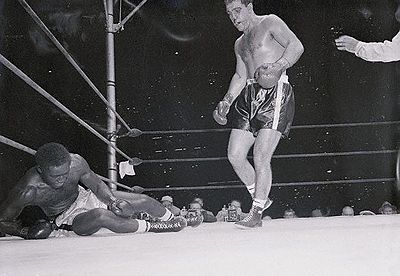
Walcott defended his titles against Charles a year later, and this time won a unanimous decision. 3 months later, Walcott fought undefeated fighter Rocky Marciano in Philadelphia, and despite dropping the challenger in the 1st round, he lost by 13th round knockout, making Marciano the 20th official heavyweight champion of the world. Marciano defended his titles six times, including two fights against Ezzard Charles and one more against Jersey Joe Walcott, before retiring on the 27th of April 1956. To this day, Marciano is the only heavyweight boxing champion to retire and stay retired as an undefeated fighter. He retired with a record 49-0, with 43 knockout victories.

 The Knockout Blog