On the 30th of November 1956, Archie Moore (Marciano’s final opponent), and Floyd Patterson faced off in a winner takes all bout for the NBA, NYSAC, The Ring and lineal titles. (The IBU had stopped operating at this point). Patterson finished Moore off in the 5th round to become the new undisputed heavyweight champion. Patterson defended his title 4 times before he faced Swedish heavyweight Ingemar Johansson. Johansson shocked the world as he knocked Patterson down 7 times in the 3rd round before the referee finally waved the fight off, with Johansson becoming the first ever Swedish heavyweight world champion. The two would then meet again a year later, and this time Patterson was the fighter who came away with a KO victory, stopping Johansson in the 5th round. They would meet one final time then in 1961 in their rubber match, which Patterson once again won, this time knocking Johansson out in the 6th round.
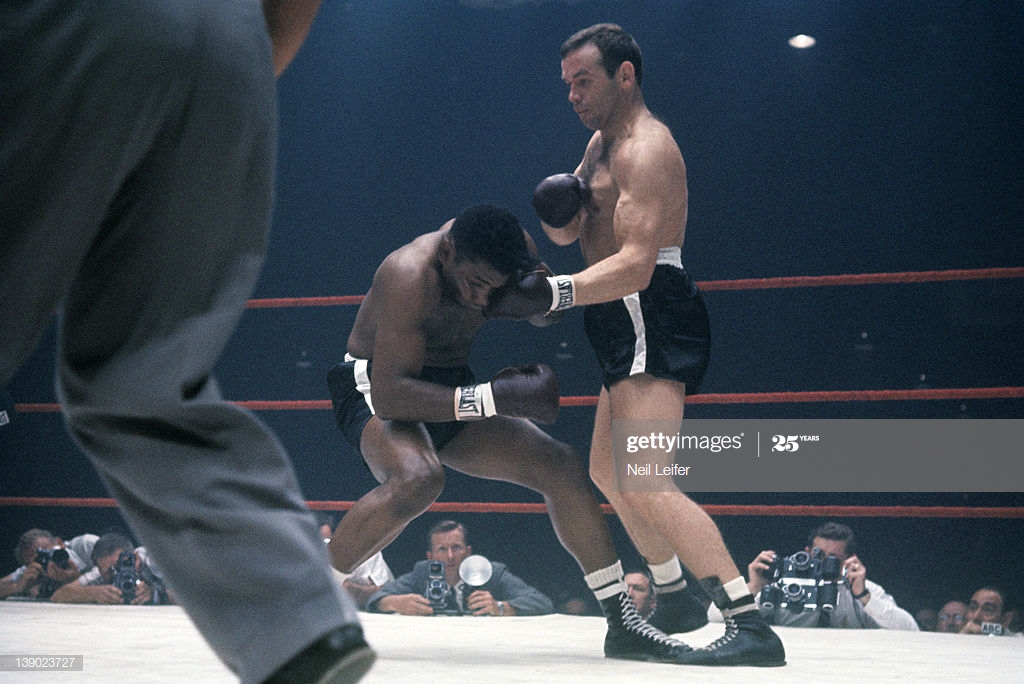
Patterson then attempted to defend his titles on the 25th of September 1962 against Sonny Liston, but failed as Liston knocked him out after just two minutes into the first round. The NBA had now been renamed to the World Boxing Association (WBA). They had a rematch the year after and the result was exactly the same, except this time, it took four seconds longer for Liston to finish off Patterson. The victory in the rematch also made Liston the first ever World Boxing Council (WBC) heavyweight champion.
Besides against Patterson, Liston never successfully defended his titles, and, on the 25th of February 1964, he took on unbeaten challenger Cassius Clay (who would later be known as Muhammad Ali). Many people expected Liston to end things early, but Clay scored a massive upset, beating Liston after he failed to get up from his stool for the 7th round. The rematch took place a year later, and Ali took far less time disposing of Liston this time, knocking him out in the first round. Due to this rematch, the WBA withdrew their recognition of Ali as their champion, meaning the WBA heavyweight title was now vacant.
On the 5th of March 1965, Ernie Terrell and Eddie Machen fought for the vacant WBA title, and Terrell won a 15 round unanimous decision, meaning that there were now two major world champions. Terrell and Ali would eventually face off on the 6th of February 1967, and in the meantime, Ali defended his titles 6 times, and Terrell defended his title twice. Ali dominated the entire fight, and ultimately won a landslide unanimous decision. Ali had once again become the unified, undisputed, heavyweight champion of the world. Ali would defend his title just once more, before he was stripped of all his titles, for refusing to enlist in the US army to serve in the Vietnam war. Ali wouldn’t be legally able to fight for 3 years, eventually returning in 1970.
A year after Ali’s final defence, Joe Frazier and Buster Mathis fought for the vacant NYSAC title, and Smokin’ Joe ended the fight in the 11th round with a technical knockout, after Mathis looked too hurt to continue. A month later, Jimmy Ellis and Jerry Quarry faced off in Oakland, California, for the vacant WBA title and Ellis won a majority decision. Frazier defended his title 4 times, and Ellis defended his once, before the two fought in February 1970. Aside from the WBA and NYSAC titles, the vacant WBC and lineal titles were on the line too. Frazier dropped Ellis twice in the fourth round, and Ellis did not get up from his corner in time to begin the fifth round, giving Frazier a fourth round stoppage victory.
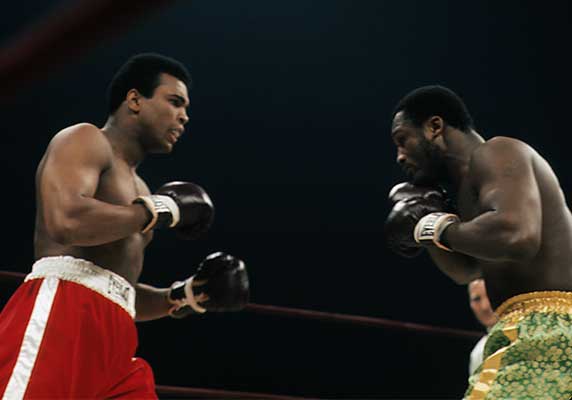
Frazier would then defend his titles 4 times between 1970 and 1973. The most significant of which came on the 8th of March 1970 as he faced off against former world champion Muhammad Ali. Many people still didn’t consider Frazier a true world champion due to the fact that he never beat Ali to win the title, but he cemented his status as the true champion on that night, deservedly winning the ‘Fight of the Century’ by unanimous decision. During Frazier’s reign as world champion, the NYSAC was no longer recognised as a major sanctioning body, so Frazier now held the WBA, WBC, Ring magazine and Lineal titles. On the 22nd of January 1973, Frazier met undefeated power-puncher George Foreman in Jamaica. Many boxing fans didn’t give Foreman a chance, but Frazier barely made it through the first round, being knocked down three times. Foreman knocked Frazier down three more time in the second round before the referee ended proceedings.
Foreman defended his title twice over the next year and a half, with both of them ending inside the first two rounds, before he faced off against Muhammad Ali in ‘The Rumble in the Jungle’, one of the most famous fights in boxing history. Many didn’t expect Ali to be able to put up much of a fight against such a formidable opponent, but Ali used a tactic that would become known as the ‘rope-a-dope’ to eventually win the fight. Ali let Foreman tire himself out, letting him throw big power shots whilst leaning against the ropes, using this movement to take some of the sting out of Foreman’s punches. In the 8th round, Ali struck, with Foreman exhausted, Ali executed a brutal combination that sent Foreman crashing down. Muhammad Ali had just reclaimed the heavyweight world titles.
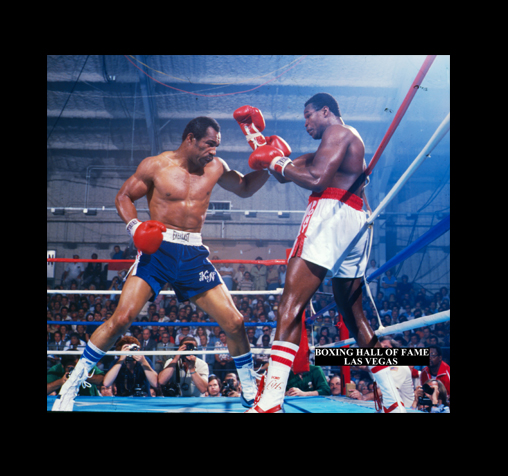
Ali would then go unbeaten for 4 years, defending his titles 10 times, including a rubber match victory over Joe Frazier, knocking him out in the 14th round. On the 15th of February, Ali faced relatively unknown fighter Leon Spinks. Spinks was an Olympic gold medalist, but at the time had a record of 7 wins, no losses and 1 draw, and had previously never fought a true title contender. It was clear to see that this was not the same Ali that had won his title back 4 years earlier, but he was still expected to walk over his far less experienced opponent. But instead, Spinks dominated the fight, and came away with a split decision victory. However, one month later, Spinks was stripped of the WBC title, and it was awarded to Ken Norton. In June of that year, Larry Holmes and Ken Norton fought for the WBC title, and Holmes won a split decision victory. Holmes would not lose the title then for 7 years.
On the 20th October 1979, John Tate and Gerrie Coetzee fought for the vacant WBA title in Pretoria, South Africa. Tate won by unanimous decision but wouldn’t successfully defend the title as 5 months later he lost it to Mike Weaver by 15th round KO. Tate was winning on the judges scorecards at the time of the stoppage before Weaver knocked him out cold with less than a minute remaining in the fight.
7 months after their first meeting, Ali and Spinks met again in New Orleans, and this time, Ali dominated and came away with a unanimous decision victory. He became the first person to become a three time lineal heavyweight champion – a feat that to this day is still yet to be matched. Ali vacated his WBA title in 1979, but he was still the lineal champion, so on the 2nd of October 1980, he fought Larry Holmes. Holmes pummelled Ali for ten rounds, and at the end of the tenth, Ali’s corner had decided that he could no longer continue. Holmes won a 10th round stoppage victory, and won the vacant ring magazine heavyweight title. This was Ali’s final ever title fight, and he would eventually retire in 1981, following a loss to Trevor Berbick.

 The Knockout Blog