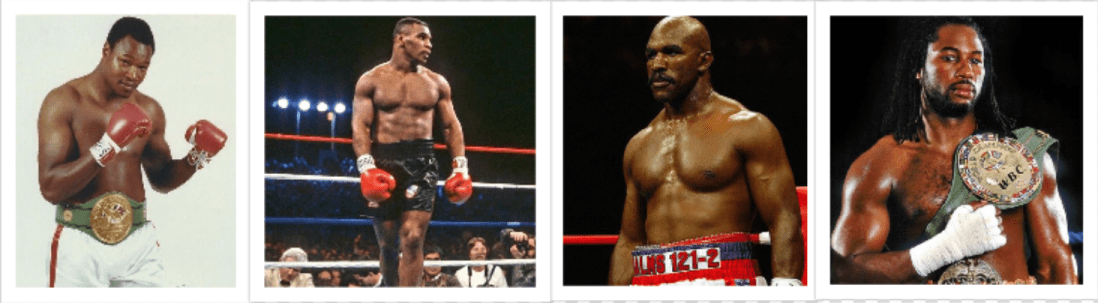
Following his victory of Muhammad Ali, Larry Holmes would go on to defend his WBC heavyweight title 8 times between 1981 and 1983. Following his first round knockout victory over Marvis Frazier, Holmes vacated the WBC title, as the governing body would not sanction his fight against Frazier as a title fight, due to the fact that he was unranked by the WBC at the time of the fight. In 1983, the International Boxing Federation (IBF) was formed. On the 11th of December Holmes was named their inaugural heavyweight champion.
Mike Weaver defended his WBA title twice in 1980 and 1981, before coming up against the unbeaten Michael Dokes, who stopped him in the first round. The two had an immediate rematch 5 months later, but this time it ended in a draw, meaning that Dokes retained his title. The next 4 WBA title fights in a row saw the title change hands, as Gerrie Coetzee, Greg Page and Tony Tubbs all failed to defend the title.
On the 9th of March 1984, Tim Witherspoon and Greg Page fought for the WBC title which Holmes had vacated the year before. Witherspoon won a majority decision, but then lost the title in his very next fight to Pinklon Thomas. Two years after losing his WBC title, Witherspoon beat Tony Tubbs to become a two-time champion, winning the WBA belt. He defended once against Frank Bruno before losing by 1st round KO to James ‘Bonecrusher’ Smith.
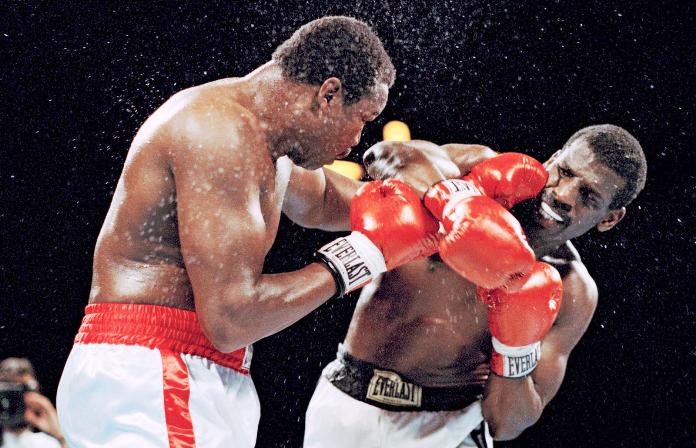
Following him gaining the IBF title, Larry Holmes made 3 successful defences of his title, and had created a record of 48-0, just one win away from equalling Rocky Marciano’s record. Holmes attempted to do this by fighting former undisputed light heavyweight champion Michael Spinks. Finally a match was found for the long reigning champion, as Spinks came away with a unanimous decision victory, becoming a two-weight world champion. Holmes attempted to win back his IBF and lineal titles 7 months later, but Spinks won again, this time by split decision. Spinks would eventually be stripped of the IBF title in 1987, but still kept his lineal title.
Pinklon Thomas made one successful defence of his WBC title against former world champion Mike Weaver, before losing it on the 22nd of March 1986 to Trevor Berbick. On the 22nd of November that year, Berbick attempted to defend his world title against unbeaten 28-0 challenger Mike Tyson. Tyson’s devastating power was finally on display on the world stage, as he stopped Berbick in the second round to become the youngest every heavyweight world champion at just 20 years old. In March of the next year Tyson unified the WBC and WBA titles, beating James Smith by unanimous decision. Tyson won the IBF title in 1987, beating Tony Tucker to become the undisputed heavyweight champion at just 21 years old. He beat former world champion Larry Holmes by 4th round KO in 1988 before facing off against lineal champion Michael Spinks. Tyson managed to get inside Spinks’ head massively going into the fight, and he capitalised on that, knocking him out just 90 seconds into the first round. Spinks would never fight professionally again.
Mike Tyson made two more defences of his world titles in the later 80’s before fighting James ‘Buster’ Douglas on the 11th of February 1990 in Tokyo. This was mainly considered to be a tune up bout for the champion before facing former undisputed cruiserweight champion Evander Holyfield. Douglas came into the fight as a 42/1 underdog, but pulled off arguably the greatest upset in professional sports history, getting up from a heavy knockdown to knock Tyson out in the 10th round.
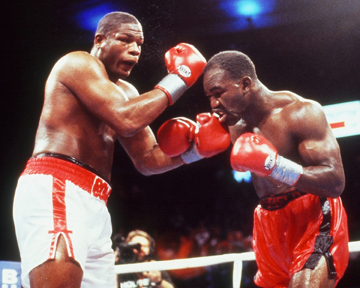
Douglas would never successfully defend his titles, and lost by 3rd round knockout to Evander Holyfield in October of that year. Between 1990 and 1992, Holyfield defended his titles 3 times, 2 defences against former world champions in George Foreman and Larry Holmes, before coming up against unbeaten Olympic silver medalist Riddick Bowe. The fight ended up being an all time classic, and one of the best heavyweight title fights in the history of the sport, as Bowe won by unanimous decision. Just one month later, Bowe vacated his WBC title by literally dropping it into a bin, due to the fact that he couldn’t reach agreed terms to face the WBC’s mandatory challenger Lennox Lewis, the man who had beaten him to the gold medal at the 1988 Olympics. Lewis was subsequently awarded the WBC title, despite not winning it inside the ring.
Lewis defended his title 3 times, including an all English battle with Frank Bruno in Cardiff, before shockingly losing it to Oliver McCall by second round KO in September 1994. McCall defended once against Larry Holmes, before losing his title 1 year after winning it to Frank Bruno. This was the 4th time that Bruno had fought for a world title, having been knocked out in all 3 of his previous attempts.
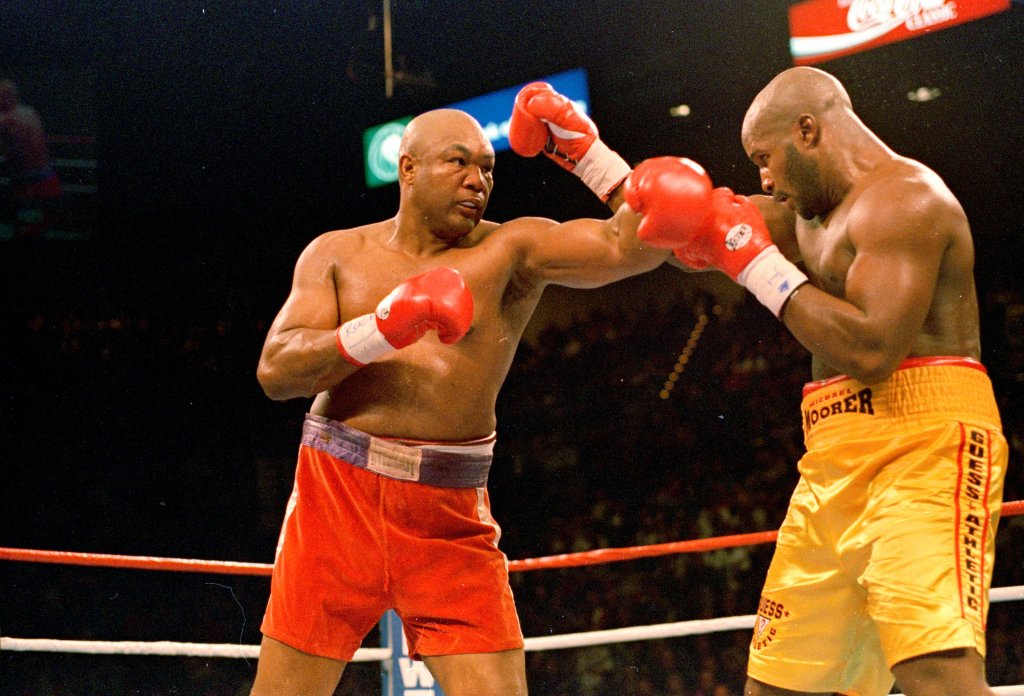
Riddick Bowe defended his title twice before having a rematch against Evander Holyfield. This time, Holyfield got the decision, becoming a two-time, two-weight world champion. His second reign would be short lived however, as in his next fight he lost his titles to former light heavyweight world champion Michael Moorer. Just like Holyfield’s reign however, it was short lived, as he faced former world champion George Foreman. Foreman was 45 at the time of the fight, but knocked Moorer out in the 10th round to become oldest ever heavyweight champion, 20 years after losing his title to Muhammad Ali. Foreman was stopped of his WBA title the March after for refusing to defend against mandatory challenger Tony Tucker.
In March 1996 Frank Bruno attempted to defend his WBC title for the first time against former world champion Mike Tyson. The two had fought previously in 1989, and Tyson had stopped Bruno in the 5th round. This time Tyson finished the job even quicker, stopping him in the 3rd to become a two-time heavyweight champion. This was Bruno’s final fight as a professional. Tyson would vacate the WBC title later than year to pursue a fight against Evander Holyfield, instead of facing his mandatory challenger Lennox Lewis. Tyson beat Bruce Seldon by first round knockout however to win the WBA world title. Bruce Seldon had beaten Tony Tucker for the vacant title 1 year earlier.
Two months after his win over Seldon, Tyson finally faced off against two-time heavyweight champion Evander Holyfield. There had been several previous attempts to make the fight happen but they had all unfortunately fallen through. Holyfield dominated for the vast majority of the fight before seriously hurting Tyson at the end of the 10th. Holyfield picked up where he left off in the 11th and stopped him inside the first minute of the round. Holyfield was now a 3-time heavyweight champion. The two had an immediate rematch 7 months later, with the fight going on to become known as the ‘bite fight’. Tyson bit Holyfield on the ear twice in the 3rd round before being disqualified at the end of the round. Holyfield retained his title and Tyson had his boxing license rescinded and was fined 3 millions dollars. He wouldn’t fight again for over a year.
Foreman defended his IBF and lineal title in April 1995 against Axel Schulz. Foreman won a very controversial majority decision so therefore the IBF demanded an immediate rematch. Foreman instead vacated his IBF title, but still retained his lineal title. He successfully defended his lineal title twice more over the next two years against Crawford Grimsley and Lou Savarese before losing in November 1997 to Shannon Briggs by majority decision. This was Foreman’s final fight as a professional.
In February 1997, Lennox Lewis fought the only man to beat him up until that point, Oliver McCall, for the vacant WBC title. McCall was going through several personal issues at the time of the fight, and often just refused to engage with Lewis. Between rounds he would refuse to sit on the stool in his corner and was seen crying in the ring, before the referee waved it off in the 5th round. Lewis was now a two-time heavyweight champion. Lewis defended his title twice before facing off against lineal champion Shannon Briggs. Briggs almost stopped Lewis early, but the champion battled back to stop him in the 5th, becoming the WBC and lineal heavyweight champion.
Following his second victory against Tyson, Holyfield unified the WBA and IBF titles, beating Michael Moorer in the 8th round. He then defended his titles against Vaughn Bean before setting up a fight against Lennox Lewis in early 1999. The winner would become the first undisputed heavyweight champion since Riddick Bowe. Lewis dominated from bell to bell in an absolutely outstanding performance, but somehow, the judges saw it differently. The fight was ruled a draw, so therefore an immediate rematch was set up. This time the judges scored it correctly and Lewis won a unanimous decision, to become the undisputed heavyweight world champion. This was the last world title fight of the 20th century.
 The Knockout Blog